
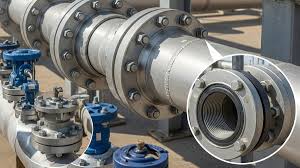
For industrial plumbing systems to be safe, effective, and long-lasting, choosing the appropriate flange type is essential. Both welded and threaded flanges have special benefits and drawbacks that affect which applications they are appropriate for.
Understanding Threaded Flanges
Threaded flanges, or screwed flanges, have internal threads that allow them to be attached directly to a pipe without welding. This design makes them particularly useful for systems where welding may be unsafe or impractical, such as in flammable environments or on small-diameter pipelines. Installation is generally faster and requires fewer specialized tools, reducing labor costs. Furthermore, threaded flanges can be readily removed for maintenance or system adjustments and are reusable.
However, threaded flanges are typically limited to low-pressure applications. It is not advised to use the threads in high-pressure or high-temperature systems since they may cause leak spots. Over time, repeated removal or improper installation can wear out the threads, compromising the connection’s integrity. Engineers must carefully consider these limitations when specifying threaded flanges for industrial projects.
Overview of Welded Flanges
Welded flanges, including both butt weld and socket weld options, provide a permanent and secure connection to piping systems. The weld ensures a seamless joint, making these flanges suitable for high-pressure, high-temperature, and critical process applications. In a socket weld flange, the pipe is placed into a recessed section of the flange before being welded. This ensures strong alignment and high strength, making it suitable for small-diameter, high-pressure pipelines.
Welded flanges provide excellent leak protection and long-lasting durability, but their installation requires skilled welders and specialized equipment, increasing initial costs. Maintenance can also be more complex since removing a welded flange often involves cutting and re-welding the pipe, making system modifications more labor-intensive than with threaded flanges.
Key Factors to Consider
When deciding between threaded and welded flanges, several factors should guide the choice:
- Operating Pressure and Temperature: Welded flanges are generally preferred for high-pressure and high-temperature applications, while threaded flanges suit low-pressure systems.
- Maintenance Requirements: Threaded flanges are perfect for systems that need regular inspection or replacement since they make disassembly and maintenance simpler.
- Installation Environment: Threaded flanges offer a safer option if welding is dangerous or banned. On the other hand, locations where strength and leak protection are crucial are better suited for welded flanges.
- Cost Considerations: While threaded flanges can reduce labor costs during installation, welded flanges often provide longer-term reliability, potentially offsetting higher upfront costs with fewer repairs and replacements.
- Material and Piping Compatibility: Engineers are responsible for making sure that the material of the chosen flange is suitable with both the fluid or gas being transported and the pipe material. Welded flanges generally accommodate a broader range of materials and alloys.
Applications and Industry Use
Low-pressure gas or fluid pipelines, chemical processing, and water treatment all frequently use threaded flanges. They are appropriate for short-term setups or smaller projects due to their simplicity of installation. On the other hand, welded flanges, including socket weld flanges, are widely used in high-pressure steam lines, oil and gas pipelines, and chemical plants where safety, durability, and leak resistance are essential.
Industrial engineers and project managers often rely on a trusted mechanical parts supplier to provide detailed specifications, quality certifications, and advice on the most suitable flange type for their projects. Partnering with a supplier experienced in both threaded and welded flanges ensures that the selected components meet regulatory standards, pressure ratings, and operational demands.
Conclusion
Choosing between threaded and welded flanges requires careful evaluation of pressure, temperature, maintenance, installation environment, and budget. Threaded flanges provide flexibility and ease of maintenance for lower-pressure systems, whereas welded flanges, such as socket weld flanges, offer unmatched strength, durability, and leak resistance for demanding industrial applications.