
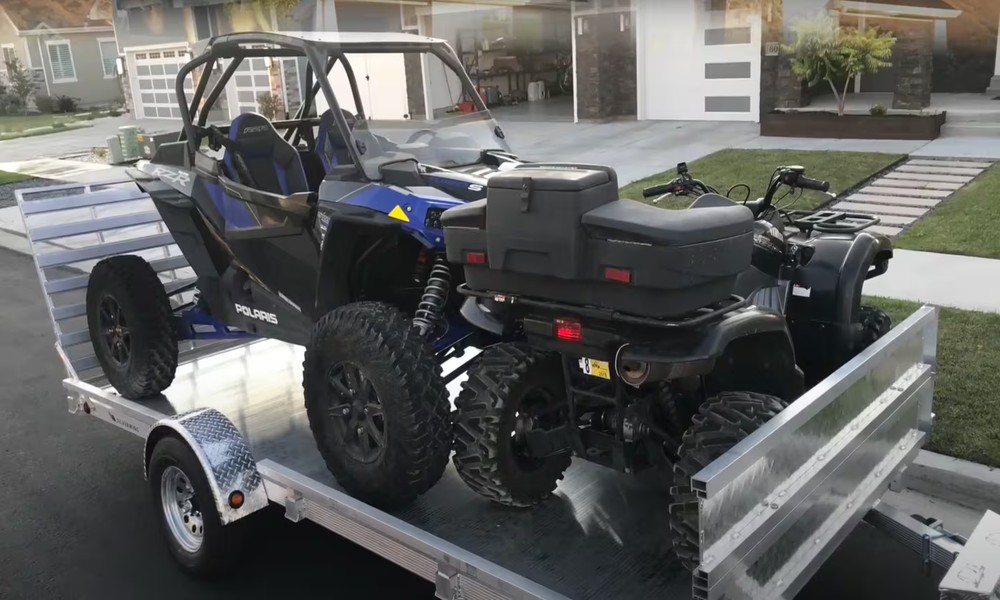
A trailer that works fine for a single quad on a forest service two-track will fail in obvious and expensive ways the first time it gets loaded with a full-size UTV, a cooler full of elk quarters, and three days of camp gear. The Sawtooth, Caribou-Targhee, and the Bear Lake backcountry don’t forgive undersized tongue weights or tie-downs that came loose at mile twelve of a washboard road. Customers heading out for archery elk, late-season chukar, or a February sled trip into the Big Hole come through Grizzly Trailer Sales every fall and winter looking for setups built for the actual job, not the catalog photo. The right answers depend on the machine, the destination, and what’s coming back out with you.
Sizing the Deck for What You’re Hauling
The biggest mismatch between buyer expectations and reality happens on deck length. Manufacturers publish nominal lengths that include the beavertail or ramp area, which isn’t usable load space.
A full-size two-seat UTV like a Polaris RZR XP 1000, Can-Am Maverick X3, or Honda Talon runs 120 to 132 inches in length, depending on bumpers and accessories. A four-seat or crew model stretches to 150 inches or more. Add winches, brush guards, and rear cargo racks and the working number climbs another 6 to 12 inches.
Common deck lengths and what fits comfortably:
- 12-foot open trailer: a single full-size ATV or one short two-seat UTV with very tight clearances
- 14-foot open trailer: one full-size two-seat UTV with room for gear behind it, or two ATVs nose to tail
- 16-foot open trailer: a four-seat UTV, or a two-seat plus a quad, or two snowmobiles with gear
- 18-to-20-foot trailer: a four-seat UTV plus accessory gear, or a two-up sled load
Width matters as much as length. Most modern UTVs run 64 inches wide. Trailers with 77-inch deck widths between fenders accommodate them; older 82-inch overall trailers with thick wraparound fenders can leave only 58 inches between, which means the machine sits on top of the fenders or doesn’t fit at all.
Ramps That Don’t Punish You at the Trailhead
Ramp design separates trailers that get used happily from trailers that sit in the yard. Three common configurations:
Spring-assist rear ramp gates fold up to become the back wall of the trailer. They handle UTVs and ATVs well when properly assisted, and the springs make a difference once you’re loading at altitude after a long hike. Without the assist kit, lifting an 8-foot ramp gate gets old fast.
Side-load slide-out ramps work on enclosed cargo trailers and some open utility trailers. Loading from the side avoids needing 20 feet of clearance behind the trailer at a crowded trailhead. Less common, but worth asking about for tight parking situations like the Stanley Lake area or the Bloomington Lake trailhead.
Bi-fold or tri-fold aluminum ramps for flatbed and deck-over trailers store on the deck and unfold for loading. These work well with deck-over trailers used for both equipment hauling and recreation, and aluminum keeps the weight manageable for one-person setup.
Ramp angle matters for low-clearance machines. UTVs with belly skids and aftermarket suspensions have specific approach and breakover angles. A trailer with a 24-inch deck height creates a steeper ramp than one at 18 inches. Beavertail trailers, where the rear 4 feet of deck slopes down toward the rear, drop the ramp angle significantly and reduce dragging on loaded UTVs.
Tie-Down Placement and What Actually Holds
Stock tie-down points on a trailer almost always need supplementing. The hardware that comes welded to the deck rails works for cargo straps but rarely sits where a UTV or sled needs to be anchored.
Recessed D-rings rated to 5,000 pounds, mounted through the deck and bolted to the frame underneath, are the standard upgrade. Four properly placed recessed rings (one near each corner of the loaded machine) hold a UTV cleanly without straps that rub on bodywork. E-track systems offer adjustable anchor positions and work well for hauling different machines on different trips. For snowmobiles, a deck-mounted glide system or marine-style cleats positioned for a-arm and ski tie-downs makes loading faster.
Ratchet straps over soft loops on the suspension or A-arms (never on plastic body panels or sway bars) are the right tie-down style for UTVs and ATVs. Sleds use ski tie-downs at the front and a strap over the rear bumper or tunnel.
A loaded UTV that breaks loose on a Forest Service road damages itself, the trailer, and anything around it. Spending an extra hundred dollars on quality tie-down hardware is the cheapest insurance in the rig.
Open Trailer or Enclosed Cargo
Open utility trailers and enclosed cargo trailers each suit different trips.
Open trailers cost less, weigh less, load faster, and handle weight better at a given GVWR because they’re not carrying 1,500 pounds of walls and roof. They expose machines to weather, road grime, and the occasional rock thrown up by traffic on Highway 75 or Highway 30.
Enclosed cargo trailers protect machines from weather and theft, double as dry storage at base camp, and let you leave gear in the trailer overnight at a hotel. They cost more upfront, weigh more, and reduce payload capacity at the same axle rating. A 7×16 enclosed trailer with a fully outfitted UTV inside often runs close to its GVWR before hunting gear gets added.
For weekend trips into developed campgrounds with truck campers or RVs nearby, open trailers usually win. For multi-day hunts where the machine and gear need to stay secure and dry, enclosed makes more sense. Hunters who do both sometimes end up owning one of each.
Weight Distribution and Forest Service Road Realities
Tongue weight should run 10 to 15 percent of loaded trailer weight. A UTV loaded too far back swings the trailer at speed and lifts the truck’s rear. Loaded too far forward, it overloads the hitch and squats the rear axle. Mark the deck with a paint stripe at the proper position once you’ve found it; reload to the same spot every trip.
Forest service roads in the Sawtooth and Caribou-Targhee districts vary from graded gravel to washboard so rough it’ll loosen anything not torqued tight. Check tie-downs at every fuel stop. Carry a spare trailer tire matched to the trailer (not a truck spare), a torque wrench for lug nuts, and basic bearing service supplies. Cell coverage drops off fast east of Stanley or up the South Fork of the Snake. The Idaho Department of Fish and Game and the U.S. Forest Service publish current road and access conditions at idfg.idaho.gov and fs.usda.gov, both worth checking before a trip.
The right ATV or UTV trailer makes the season easier from the first morning of archery through the last sled run of March. The team at Grizzly Trailer Sales has helped hunters and recreation users across southern Idaho match trailers to machines for years. Bring the dimensions of your UTV or sled, your tow vehicle’s specs, and a sense of where you’ll be hauling, and we’ll get you set up at the Rupert or Montpelier yard with a trailer ready for the country you actually run.
