
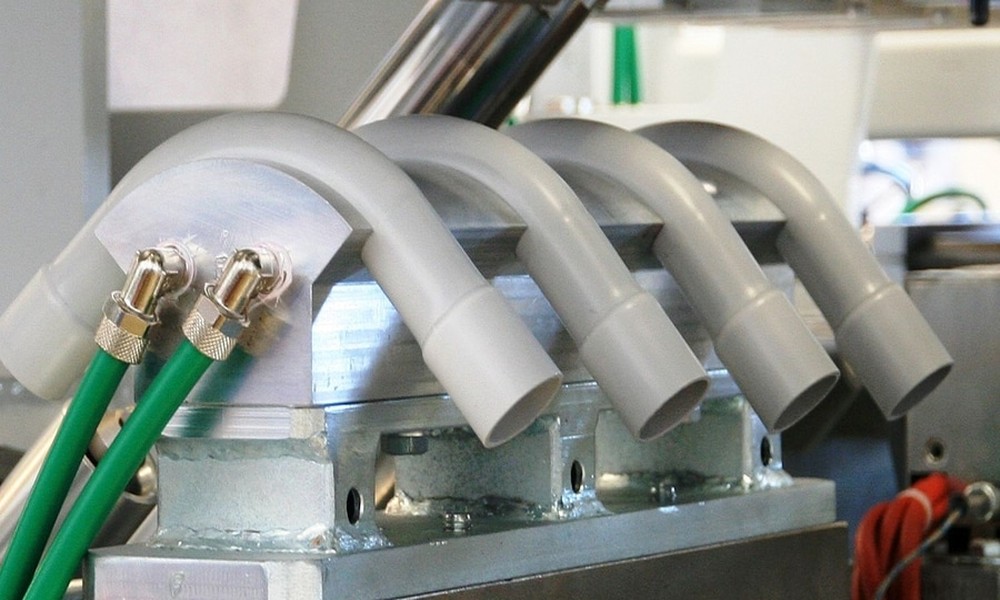
A PVC pipe bending machine can improve bending accuracy, reduce manual labor, and help pipe manufacturers handle more customized production needs. But the price can vary widely depending on machine design, automation level, pipe size, and production requirements.
1. Machine Type and Automation Level
One of the biggest factors affecting the price is whether the machine is manual, semi-automatic, or fully automatic.
A manual PVC pipe bending machine is usually the most affordable option. It is suitable for small workshops, repair work, or low-volume production. However, it requires more operator involvement and may not be ideal for consistent batch production.
A semi-automatic machine offers better efficiency and repeatability. Operators still need to load or adjust pipes, but heating, bending, or cooling steps may be partly automated. This type is often a practical choice for small and medium pipe businesses.
A fully automatic PVC pipe bending machine costs more because it can complete multiple steps with minimal manual operation. It is better suited for manufacturers with higher output requirements, strict bending accuracy needs, and continuous production lines.
2. Pipe Diameter and Wall Thickness
The larger the pipe diameter, the stronger the machine structure needs to be. A machine designed for small PVC pipes will usually cost less than one built for large-diameter pipes or thick-wall pipes.
For example, bending small pipes used in electrical conduit or light plumbing applications requires less heating power and lower mechanical force. In contrast, large drainage, irrigation, or industrial pipes require stronger clamps, more accurate temperature control, and heavier machine frames.
Wall thickness also matters. Thicker pipes need longer heating times and more stable bending force to avoid deformation, cracking, or uneven curves. As a result, machines for thicker pipes are usually more expensive.
3. Heating System Quality
PVC pipe bending depends heavily on controlled heating. If the pipe is heated unevenly, the bend may wrinkle, collapse, or lose its round shape. Therefore, the heating system has a direct impact on machine cost.
Common heating methods include hot air heating, infrared heating, and mold-based heating. Machines with precise temperature control, adjustable heating zones, and energy-efficient heaters usually cost more, but they also provide better bending quality and lower waste rates.
For manufacturers focused on stable production, investing in a better heating system can reduce defective products and improve long-term production efficiency.
4. Bending Accuracy and Mold Design
Different pipe applications require different bending angles and curve shapes. A simple machine for basic bending will be cheaper than a customized machine designed for multiple angles, special radius bends, or complex pipe shapes.
The mold system also affects price. Standard molds are more affordable, while custom molds increase the total cost. If your business needs to produce pipes for specific construction, drainage, electrical, or industrial projects, customized tooling may be necessary.
A high-quality mold ensures the pipe retains its shape during bending and enhances product consistency. This is particularly critical for businesses handling repeat orders with tight dimensional tolerances.
5. Production Capacity
Production capacity is another key price factor. A machine for occasional bending work is very different from a machine designed for continuous industrial production.
Higher-capacity machines may include faster heating, automatic feeding, multiple bending stations, or improved cooling systems. These features increase the purchase price but can reduce labor costs and improve daily output.
When choosing plastic pipe machinery, buyers should not only compare the machine price but also consider the cost per finished pipe. A cheaper machine may become expensive if it produces slowly or creates too much waste.
6. Control System and Operation Interface
Modern PVC pipe bending machines may include PLC control, touchscreen operation, recipe storage, automatic temperature adjustment, and fault alarms. These features make operation easier and reduce dependence on highly skilled workers.
A basic control system is cheaper, but it may require more manual adjustment. A more advanced control system costs more but improves repeatability, efficiency, and ease of training.
For factories with multiple operators or frequent product changes, a user-friendly control system can save time and reduce operation errors.
7. Machine Materials and Build Quality
The quality of the machine frame, clamps, heating parts, electrical components, and pneumatic or hydraulic systems also affects cost. Machines made with stronger steel structures and reliable components usually have a higher price but offer better durability.
Low-cost machines may look similar at first, but they may have shorter service life, unstable performance, or higher maintenance needs. For long-term production, build quality should be considered a serious investment rather than an optional upgrade.
8. Customization Requirements
Many manufacturers need customized solutions based on pipe size, bending angle, production layout, or integration with other Plastic Pipe Machinery. Customization can include special molds, extended heating zones, automatic loading systems, cooling fixtures, or safety protection designs.
The more customized the machine is, the higher the price will usually be. However, customization can help the machine match real production needs more accurately.
Conclusion
The cost of a PVC pipe bending machine depends on many factors, including automation level, pipe diameter, heating system, mold design, production capacity, control system, and customization needs. Instead of choosing only by the lowest price, buyers should evaluate machine performance, bending quality, long-term reliability, and production efficiency.
For pipe manufacturers, the right PVC pipe bending machine is not just a cost-it is an investment in better product quality, lower labor demand, and stronger production capability.