
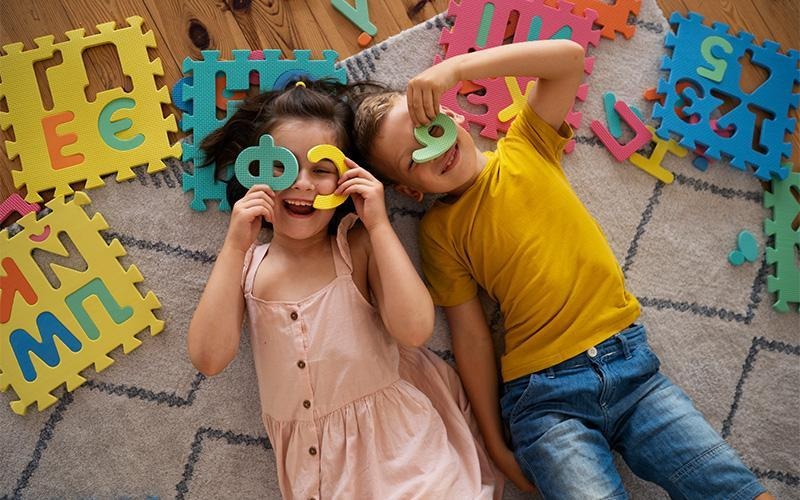
Early childhood education tends to get filed under “cute but optional” in the minds of some adults. Mention anything about early childhood education course options, and people start picturing glitter glue, snack time, and nursery rhymes. It’s no surprise the field is riddled with myths. People underestimate the science behind it, the skill required, and the long-term impact it has on a child’s development.
These myths have clung on like Velcro, even as research has steamrolled over them. Let’s peel back the misconceptions and shine a light on what early education is really about—spoiler: it involves much more than learning how to sit in a circle.
Myth 1: “It’s Just Play, Nothing Academic”
The idea that young children are simply mucking about in early education settings is deeply rooted—and wildly inaccurate. Yes, children play, but the play is structured, intentional, and packed with learning objectives. Activities are designed to develop fine motor skills, spatial awareness, language acquisition, and emotional regulation. Those building blocks they’re stacking? That’s spatial reasoning. That storytelling game? Vocabulary expansion in motion.
Educators in early settings don’t just hover and supervise; they guide, assess, and adjust. They tailor interactions to help children make connections and expand their understanding. There’s pedagogy involved. Anyone who’s glanced at the curriculum within an early childhood education course knows that child psychology, developmental milestones, and assessment methods take centre stage. The line between play and academics isn’t blurry; it’s strategic. Play is the medium, but learning is the mission.
Myth 2: “Children Will Learn Everything at Primary School Anyway”
Some parents hold off, believing formal education starts in Primary 1, and anything before that is filler. That’s like skipping the foundation and trying to build straight onto stilts. What happens in those early years forms the cognitive, emotional, and behavioural scaffolding that everything else rests upon.
Early childhood education supports brain development at its most critical phase. The synaptic connections built through storytelling, music, movement, and interaction are wiring the brain for literacy, numeracy, empathy, and problem-solving. Waiting until primary school to kick-start learning means missing a golden developmental window.
It’s not just about being school-ready, either. It’s about being life-ready. The early years introduce routine, cooperation, resilience, and managing frustration. Children who’ve had those early experiences don’t just transition better—they thrive.
Myth 3: “Anyone Can Teach Young Children”
The assumption here seems to be that because the pupils are small, the job must be easy. If anything, it’s harder. Teaching a room full of energetic, emotional, curious children requires the reflexes of a goalkeeper and the patience of a monk.
Learning about early childhood education course material will reveal just how complex the role is. Early educators need to understand developmental stages, identify delays, spot potential, and handle behavioural challenges—all while keeping things engaging and fun. They’re not babysitters; they’re architects of learning, laying down the foundation for the rest of a child’s academic journey.
What’s more, working with young children means working with families, building trust, and ensuring that education extends beyond the classroom. Professional education programmes teach the relational and communication skills required that make most corporate jobs look like a coffee break.
Myth 4: “Early Education Doesn’t Impact Long-Term Success”
This one lingers despite piles of evidence to the contrary. The idea that early education has little bearing on future academic or social outcomes is like saying you can skip breakfast every day and it won’t affect your health—it sounds convenient but doesn’t hold up.
Numerous longitudinal studies have shown that children who attend quality early education programmes tend to perform better academically, show greater social competence, and even have higher graduation rates later in life. The early years are where habits form, confidence builds, and curiosity blossoms.
These aren’t fleeting effects. The influence of early learning ripples through the years, impacting everything from attention span to interpersonal skills. It sets the tone not just for schooling but for self-worth, motivation, and ambition. Overlooking its value is a bit like throwing away the blueprint for a skyscraper—what goes up afterwards will always be less stable.
Myths about early childhood education persist largely because people still view it through a nostalgic, oversimplified lens. But anyone who has taken the time to learn about early childhood education course frameworks will tell you: that it’s far from rudimentary. It’s deliberate, research-backed, and deeply influential. The sooner these myths are laid to rest, the sooner young learners can benefit from an education system that takes their early years seriously—and treats early educators as the professionals they are.
Ready to dive deeper into what early education entails? Contact Asian International College today and explore how their programmes can reshape your understanding of early childhood education.