
Understanding the Public Right-of-Way
When we talk about the “public right-of-way” (ROW) in Indianapolis-Marion County, we’re referring to the land dedicated for public use, typically managed by the Department of Public Works (DPW) and the Department of Business and Neighborhood Services (DBNS). This isn’t just the street itself; it encompasses a broader area that includes sidewalks, curbs, utility strips, and even some areas beyond the paved surface. It’s the essential infrastructure that allows for public movement, utility services, and community access.
The primary reason for regulating activities within the ROW is safety. Uncontrolled work can pose significant hazards to pedestrians, cyclists, and vehicle traffic. Beyond safety, these regulations protect vital public infrastructure—from underground utility lines to street surfaces and drainage systems. Maintaining the integrity of the ROW ensures the smooth functioning of our city and preserves the public’s investment in its infrastructure.
Any activity that impacts the normal function, safety, or physical integrity of this public space generally requires a permit. This includes everything from digging to installing temporary structures or even conducting certain events.
Navigating the Indianapolis Right of Way Permit Process
Obtaining a right-of-way permit in Indianapolis is a structured process designed to ensure all work is conducted safely and in compliance with city standards. This Indianapolis right of way permit guide will walk you through the key permit types, the application process, and your responsibilities as a permit holder.
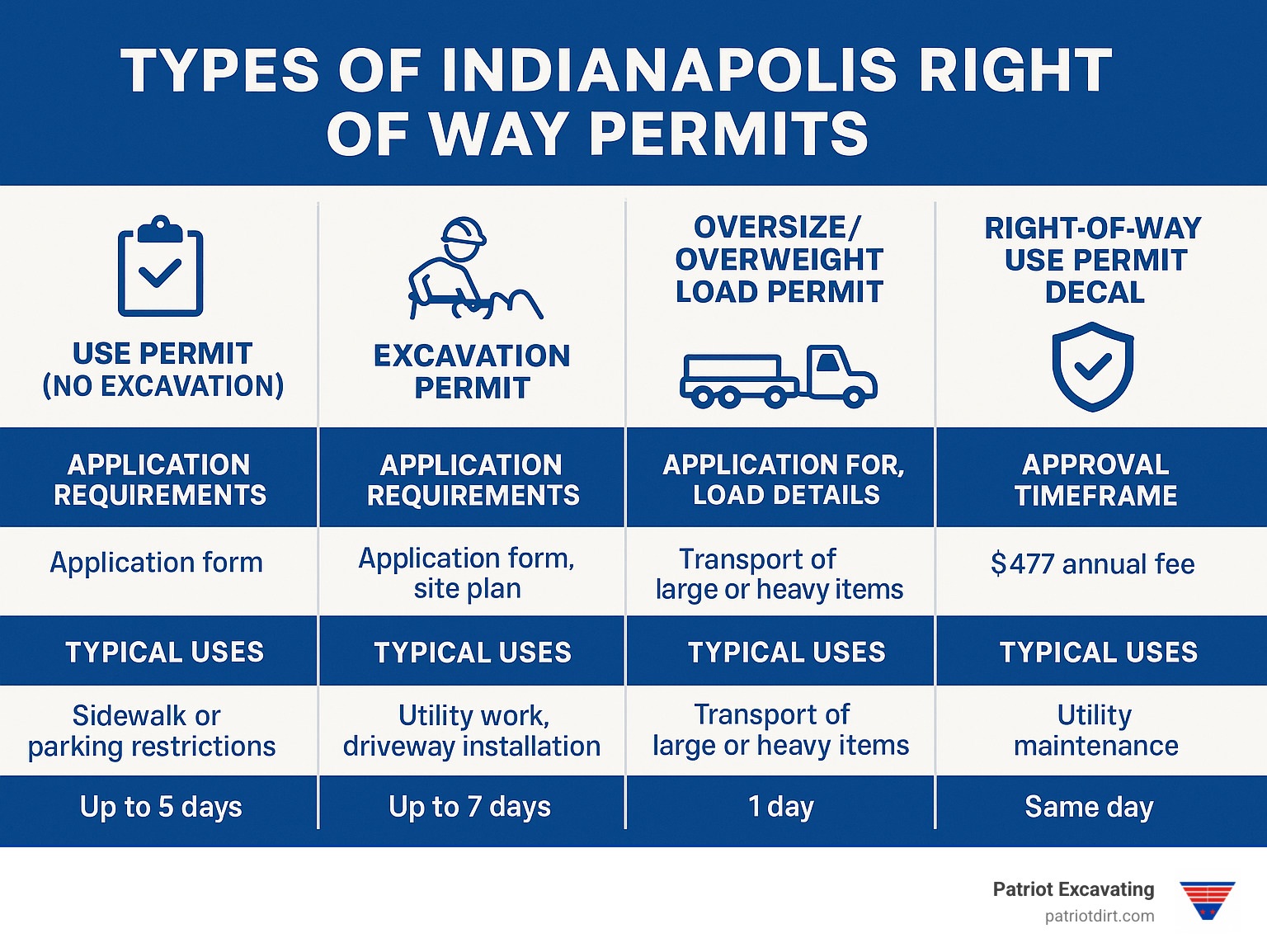
Key Permit Types and What They Cover
The City of Indianapolis categorizes right-of-way permits primarily based on the nature of the activity. Understanding these distinctions is crucial for determining which permit you need.
- Use Permit (No Excavation): This permit is required for activities that occupy or temporarily restrict the public right-of-way but do not involve breaking ground or disturbing the existing surface. This could include placing dumpsters, scaffolding, temporary signs, or reserving parking meters for a short period. Public utilities and their subcontractors often use annual decal permits for minor, short-duration work (up to 8 hours) without prior authorization, allowing for efficiency in routine maintenance.
- Excavation Permit: As the name suggests, this permit is necessary for any work that involves digging, trenching, boring, or otherwise disturbing the surface or subsurface of the public right-of-way. This covers a wide range of activities, such as installing or repairing utility lines (water, sewer, gas, electric, fiber optics), constructing driveways, or performing street cuts for drainage improvements. These permits are typically more complex due to the potential impact on underground infrastructure and surface restoration.
- Oversize Load Permit: In addition to construction or excavation, this permit is vital for transporting exceptionally large or heavy vehicles or loads through the city’s streets. These permits ensure that routes are safe for the load, that infrastructure (like bridges) can support the weight, and that traffic flow is managed appropriately. Specific requirements apply, particularly for travel within the I-465 beltway or for loads exceeding certain weight thresholds.
Here’s a comparison of these main permit types:
| Permit Type | Common Activities