

The Foundations of a Successful PPC Strategy
In today’s digital landscape, getting your business seen by the right audience is crucial. Many businesses struggle to cut through the noise and reach potential customers effectively. This is where Pay-Per-Click (PPC) advertising steps in, offering a direct and powerful way to attract targeted traffic.
PPC is an internet advertising model where advertisers pay a fee each time their ad is clicked. Think of it as buying visits to your website, rather than earning them organically. But simply running ads isn’t enough; strategic oversight and continuous optimization are key to success.
This process is known as PPC management. It involves a sophisticated approach to overseeing your ad spend, ensuring every dollar works hard to drive relevant traffic and conversions. Without proper management, PPC campaigns can quickly become a drain on resources.
In this comprehensive guide, we will explore everything you need to know about PPC management. We’ll break down how PPC advertising works, dig into its numerous benefits for businesses, and outline the essential components that make a campaign thrive. We’ll also cover how to measure performance, avoid common pitfalls, and integrate PPC with your broader marketing strategy.
By the end, you will understand how expert, Data-driven PPC management can transform your advertising from an expense into a powerful engine for growth.
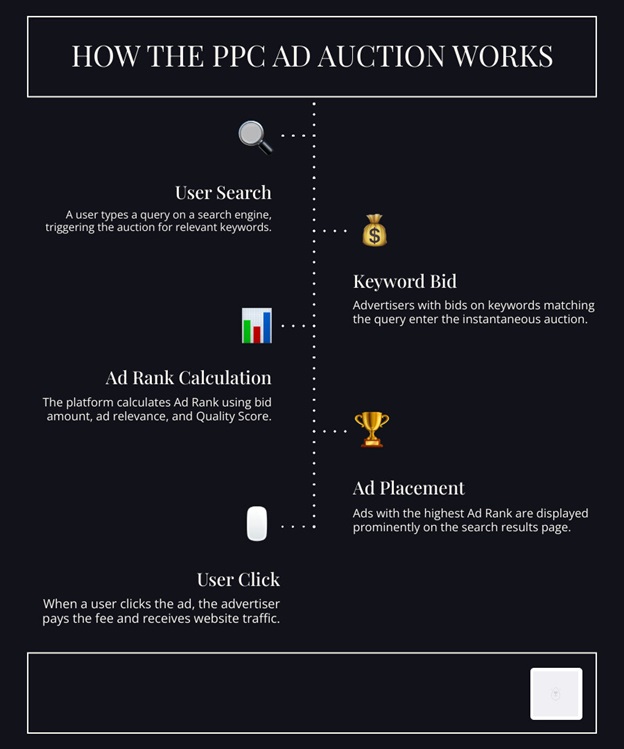
At its core, PPC advertising operates on an auction-based system. When a user performs a search query on a platform like Google or Bing, an instantaneous auction takes place among advertisers bidding on keywords related to that query. The winning ads are then displayed prominently on the search results page or other designated ad placements.
The mechanics of this “ad auction” are critical to understanding how PPC works. It’s not simply about who bids the highest. Advertising platforms use a sophisticated algorithm that considers several factors to determine which ads get shown and in what order. Key elements include:
- Bidding Strategies: Advertisers set a maximum bid they are willing to pay for a click. However, modern PPC platforms offer various automated bidding strategies (e.g., maximize clicks, maximize conversions, target CPA, target ROAS) that use machine learning to optimize bids in real-time based on your campaign goals.
- Quality Score: This is a crucial metric, particularly in Google Ads, that measures the relevance and quality of your keywords, ads, and landing pages. A higher Quality Score can lead to lower costs per click (CPC) and better ad positions. It’s influenced by expected click-through rate (CTR), ad relevance, and landing page experience.
- Ad Rank: This is the value that determines your ad’s position on the search results page and whether your ad will show at all. It’s generally calculated by multiplying your bid by your Quality Score. A higher Ad Rank means a better position and more visibility.
The business benefits of PPC are numerous and compelling. Unlike organic search engine optimization (SEO), PPC offers immediate visibility. Once your campaign is live, your ads can start appearing for relevant searches almost instantly. This rapid deployment makes it an ideal strategy for new businesses, product launches, or time-sensitive promotions.
Furthermore, PPC provides highly measurable results. Every click, impression, and conversion can be tracked, allowing for precise ROI calculations and data-driven decision-making. This level of transparency is invaluable for optimizing your marketing spend. PPC aims to drive qualified inbound traffic – users who are actively searching for products or services like yours, making them highly receptive to your offerings. This targeted approach means you’re reaching potential customers who are already in a buying mindset. In fact, paid search can boost brand awareness by as much as 80%, illustrating its power beyond just direct conversions.
The Different Types of PPC Campaigns
PPC is not a one-size-fits-all solution; it encompasses a diverse range of campaign types, each designed to achieve specific marketing objectives across various digital channels. Understanding these different formats is essential for crafting a comprehensive PPC strategy.
Here are some of the most common PPC campaign types:
- Search Advertising: This is perhaps the most well-known form of PPC. Ads appear on search engine results pages (SERPs) when users search for specific keywords. These are typically text-based ads that show up at the top or bottom of the organic search results. Google Ads and Microsoft Advertising (Bing Ads) are the primary platforms for search advertising.
- Display Advertising: Display ads are visual ads (images, animations, videos) that appear on websites, apps, and other digital properties that are part of an ad network (like the Google Display Network). They are excellent for building brand awareness, reaching a broad audience, and visual storytelling.
- Social Media Advertising: Platforms like Facebook (Meta Ads), Instagram, LinkedIn, X (Twitter), and TikTok offer powerful advertising capabilities. These ads leverage rich user data for highly precise targeting based on demographics, interests, behaviors, and connections. Social media ads can drive brand awareness, engagement, and direct conversions.
- Remarketing and Retargeting: This strategy involves showing ads to users who have previously interacted with your website or app but haven’t converted. By “following” them across the web, remarketing campaigns keep your brand top-of-mind and encourage them to complete a desired action, making them incredibly effective for nurturing leads.
- Google Shopping Ads: For e-commerce businesses, Shopping Ads (also known as Product Listing Ads or PLAs) are indispensable. These visually rich ads display product images, prices, and merchant names directly on the SERP, making it easy for users to compare products and click through to purchase.
- In-Stream Video Ads: These are video advertisements that play before, during, or after video content on platforms like YouTube. They are highly engaging and effective for brand storytelling, product demonstrations, and reaching a video-first audience.
Each of these campaign types has unique strengths and ideal use cases. A truly effective PPC strategy often involves a mix of these formats, custom to the customer journey and overall marketing goals. For a deeper dive into the specific channels and how they work, exploring resources on PPC channels can provide valuable insights.
Why Professional PPC Management Matters
While the concept of PPC might seem straightforward – bid on keywords, create ads, get clicks – the reality of managing successful campaigns is far more intricate. It’s a dynamic, data-intensive field that requires constant attention and expertise. This is precisely why professional PPC management services are not just a luxury, but often a necessity for businesses looking to maximize their return on investment.
One of the primary reasons professional management is crucial is the sheer complexity of modern PPC platforms. Google Ads alone has hundreds of features, bidding strategies, targeting options, and reporting metrics. Navigating this intricate ecosystem effectively requires deep knowledge and experience. Without it, businesses risk significant wasted ad spend. Less than 25% of PPC ads produce any conversions without proper management, highlighting the critical need for skilled oversight.
Effective PPC management is also about continuous optimization. Campaigns are not “set it and forget it.” Market conditions change, competitors adjust their strategies, user behavior evolves, and new features are rolled out. A professional PPC manager constantly monitors performance, identifies trends, and makes data-driven adjustments to bids, keywords, ad copy, and targeting to ensure campaigns remain profitable and efficient. This includes ongoing PPC bid management to ensure every dollar is spent wisely.
Furthermore, technical expertise is paramount. This includes:
- Advanced Keyword Research: Beyond basic terms, identifying long-tail keywords, understanding search intent, and utilizing negative keywords to filter out irrelevant traffic.
- Ad Copywriting and Creative Development: Crafting compelling ad copy that resonates with the target audience and adheres to platform guidelines, and developing engaging visual assets for display and social campaigns.
- Landing Page Optimization: Ensuring that the pages users land on after clicking an ad are highly relevant, user-friendly, and optimized for conversions.
- Data Analysis and Reporting: Translating complex data into actionable insights and providing clear, transparent reports on campaign performance.
Professional PPC management transforms ad spend from a potential liability into a strategic investment. It ensures that your campaigns are not just running, but are actively working to achieve your business goals, driving qualified leads and sales efficiently.
Key Components of Effective PPC Management
Effective PPC management is a multi-faceted discipline that goes far beyond simply launching ads. It involves a systematic approach to planning, execution, and continuous refinement. At its heart, it’s about aligning your PPC efforts with your overarching business objectives to ensure every advertising dollar contributes to growth.
The campaign setup process forms the bedrock of any successful PPC strategy. This initial phase involves critical decisions that will shape the entire campaign’s trajectory:
- Defining Business Goals: Before any ads are created, clearly define what you want to achieve. Is it lead generation, e-commerce sales, brand awareness, app downloads, or something else? Specific, measurable, achievable, relevant, and time-bound (SMART) goals are crucial.
- Budget Allocation: Determining how much you’re willing to spend and how that budget will be distributed across different campaigns, ad groups, and channels. This requires understanding your target cost-per-acquisition (CPA) and desired return on ad spend (ROAS).
- Strategic Keyword Research: Identifying the terms and phrases your target audience uses when searching for your products or services. This involves understanding search intent and competitive landscapes.
- Logical Ad Group Structure: Organizing your keywords and ads into tightly themed ad groups ensures maximum relevance, which positively impacts Quality Score and ad performance.
- Compelling Ad Creation: Crafting engaging ad copy and selecting appropriate creative assets that grab attention and drive clicks.
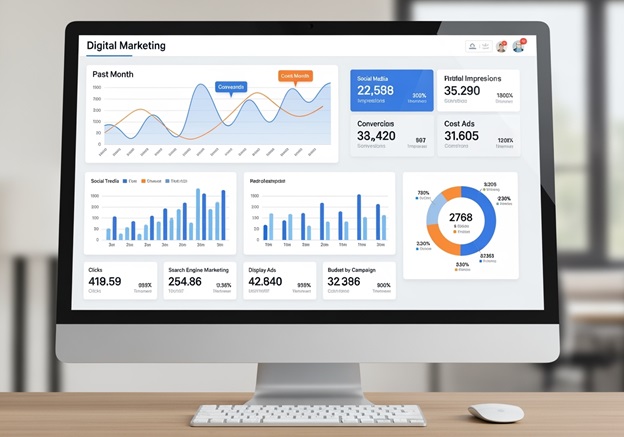
This meticulous setup lays the groundwork for campaigns that are not only effective but also highly efficient, ensuring your resources are directed precisely where they will yield the best results. For a comprehensive overview of the entire process, exploring a guide on PPC campaign management can be highly beneficial.
Strategic Keyword Research and Targeting
Keywords are the backbone of any successful PPC campaign, especially in search advertising. Strategic keyword research and targeting involve more than just listing popular terms; it’s about understanding user intent and aligning your ads with what potential customers are truly looking for.
We categorize keyword intent into several types:
- Commercial Intent: Users are looking to buy something (e.g., “best running shoes,” “CRM software pricing”).
- Transactional Intent: Users are ready to take immediate action (e.g., “buy iPhone 15,” “book flight to Paris”).
- Informational Intent: Users are seeking information (e.g., “how to fix a leaky faucet,” “history of artificial intelligence”).
- Navigational Intent: Users are trying to find a specific website or brand (e.g., “Amazon login,” “Nike official site”).
For most PPC campaigns focused on conversions, we prioritize commercial and transactional keywords.
Another crucial distinction is between long-tail vs. short-tail keywords. Short-tail keywords (e.g., “shoes”) are broad, high-volume, and highly competitive. Long-tail keywords (e.g., “men’s waterproof trail running shoes size 10”) are more specific, have lower search volume, but often indicate stronger intent and face less competition, leading to higher conversion rates.
To control how closely search queries match your keywords, we use keyword match types:
- Broad Match: Reaches the widest audience, including misspellings, synonyms, and related searches. (e.g., keyword “women’s hats” could match “ladies headwear”).
- Phrase Match: Matches searches that include the exact phrase, but can have words before or after it. (e.g., keyword “running shoes” could match “best running shoes for beginners”).
- Exact Match: Matches searches that are identical to your keyword, or very close variations. (e.g., keyword “[red shoes]” would primarily match “red shoes”).
The crucial role of negative keywords cannot be overstated. These are terms you explicitly tell the ad platform not to show your ads for. For example, if you sell new cars, you might add “used,” “rental,” or “free” as negative keywords to avoid irrelevant clicks and wasted spend. This refines your audience quality and improves ROI.
Beyond keywords, audience targeting options allow us to reach specific segments of users based on:
- Demographics: Age, gender, parental status, household income.
- Location: Country, region, city, or even a specific radius around a business.
- Device: Mobile, desktop, tablet.
- Interests and Behaviors: What users are interested in, what websites they visit, what apps they use.
- Remarketing Lists: Users who have previously interacted with your website or app.
By combining precise keyword targeting with sophisticated audience segmentation, we can ensure your ads are seen by the right people, at the right time, with the right message.
Compelling Ad Creation and Landing Page Optimization
Once we’ve identified the right keywords and audience, the next step is to craft compelling ads that entice users to click. Ad creation is both an art and a science, blending persuasive copywriting with an understanding of platform algorithms and user psychology.
Ad copy best practices include:
- Relevance: Your ad copy must directly relate to the keywords and the user’s search intent.
- Clarity and Conciseness: Get your message across quickly and clearly.
- Unique Selling Proposition (USP): Highlight what makes your product or service stand out.
- Benefits-Oriented: Focus on what the user gains, not just features.
- Strong Call-to-Action (CTA): Tell users exactly what you want them to do (e.g., “Shop Now,” “Get a Free Quote,” “Learn More”).
- Keyword Inclusion: Naturally weave your target keywords into the ad headlines and descriptions.
We constantly engage in A/B testing ad variations. This involves running multiple versions of an ad simultaneously, changing one element at a time (e.g., headline, description, CTA), and then analyzing which version performs best based on metrics like CTR and conversion rate. This iterative process ensures continuous improvement.
However, a great ad is only half the battle. The landing page – the page a user arrives at after clicking your ad – is equally, if not more, critical for conversion. We focus on ensuring landing page relevance by matching the ad’s message and offer to the content on the landing page. Discrepancies lead to high bounce rates and wasted ad spend.
Optimizing user experience (UX) on the landing page is paramount. This includes:
- Fast Load Times: Users won’t wait for slow pages.
- Mobile Responsiveness: Ensuring the page looks and functions perfectly on all devices.
- Clear Navigation: Making it easy for users to find the information they need.
- Trust Signals: Including testimonials, security badges, and contact information.
Finally, we apply Conversion Rate Optimization (CRO) techniques to maximize the percentage of visitors who complete the desired action. This can involve A/B testing different elements on the landing page, such as headlines, images, form fields, and CTA button colors. Customers are 50% more likely to purchase something after clicking a relevant paid ad, but only if the landing page delivers on the ad’s promise and provides a seamless user experience.
Measuring Performance and Driving ROI
The beauty of PPC advertising lies in its unparalleled measurability. Unlike traditional advertising, every click, impression, and conversion can be tracked, providing a wealth of data. However, simply having data isn’t enough; the true value comes from knowing how to interpret it and use it to make informed decisions.
The importance of conversion tracking cannot be overstated. A conversion is a desired action a user takes on your website, such as making a purchase, filling out a form, or calling your business. Without accurate conversion tracking, you’re essentially flying blind, unable to determine which campaigns, keywords, or ads are actually generating business outcomes.
We focus on connecting campaign metrics to business objectives. For example, if your goal is lead generation, we’ll prioritize metrics like Cost-Per-Lead (CPL) and lead quality over just clicks. If it’s e-commerce sales, Return On Ad Spend (ROAS) and average order value (AOV) become paramount. This ensures our efforts are always aligned with what truly matters to your bottom line.
Data analysis for strategic decisions is an ongoing process. We regularly dive deep into the numbers to identify patterns, uncover opportunities, and diagnose issues. This might involve segmenting data by device, location, time of day, or audience to pinpoint areas for optimization. The insights gained from this analysis directly inform our strategic adjustments, ensuring continuous improvement and maximized ROI.
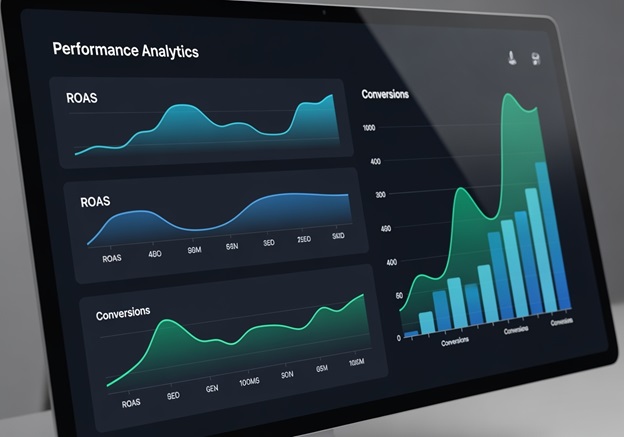
Essential Metrics for Your PPC Management Dashboard
To effectively measure performance and drive ROI, we rely on a core set of metrics that provide a comprehensive view of campaign health and effectiveness. Understanding these metrics is fundamental to robust PPC performance measurement.
Here are the essential metrics we monitor closely:
- Click-Through Rate (CTR): The percentage of people who click on your ad after seeing it (Clicks ÷ Impressions). A high CTR indicates that your ad copy is relevant and compelling.
- Cost-Per-Click (CPC): The average amount you pay for each click on your ad (Total Cost ÷ Clicks). This metric helps us understand the efficiency of our bidding strategy and keyword selection.
- Conversion Rate: The percentage of clicks that result in a conversion (Conversions ÷ Clicks). This is a critical indicator of how effectively your ads and landing pages are driving desired actions.
- Cost-Per-Acquisition (CPA): The average cost to acquire a single conversion (Total Cost ÷ Conversions). This metric directly relates to your business’s profitability goals.
- Return On Ad Spend (ROAS): The revenue generated for every dollar spent on advertising (Revenue from Ads ÷ Ad Spend). ROAS is a key profitability metric, especially for e-commerce businesses.
- Quality Score: As discussed, this is Google’s rating of the quality and relevance of your keywords, ads, and landing pages. A higher Quality Score can lead to lower CPCs and better ad positions.
- Impression Share: The percentage of times your ad was shown compared to the total number of times it could have been shown. This helps us understand potential missed opportunities due to budget or Ad Rank.
For a more detailed explanation of these and other important terms, refer to our comprehensive PPC glossary. By keeping a close eye on these metrics, we can quickly identify areas of strength and weakness, allowing for agile optimization and ensuring your campaigns are always moving towards your business objectives.
Leveraging Data for Continuous Improvement
The true power of PPC management lies in its iterative nature – the ability to continuously learn, adapt, and optimize based on performance data. We don’t just set up campaigns and let them run; we accept a cycle of analysis, adjustment, and refinement.
Regular performance analysis is a cornerstone of our approach. This involves daily, weekly, and monthly reviews of all key metrics, looking for trends, anomalies, and opportunities. We ask questions like: Which keywords are driving the most profitable conversions? Are there any ads underperforming? Is our budget being spent efficiently across all channels?
Based on these insights, we implement strategic budget reallocation. If certain keywords or ad groups are consistently delivering high ROAS, we might increase their budget. Conversely, if others are wasting spend without converting, we’ll reallocate those funds to more promising areas. This ensures that your advertising budget is always working as hard as possible.
We also manage manual vs. automated bid adjustments. While automated bidding strategies leverage machine learning for real-time optimization, there are often opportunities for manual intervention to fine-tune bids for specific high-value keywords or to respond to unique market conditions. The right balance between automation and human oversight is key.
The value of data-driven PPC management is about focusing on profitability. We prioritize metrics like CPA and ROAS over vanity metrics like impressions or clicks, ensuring that our efforts directly contribute to your bottom line. This approach helps maximize ROI by constantly refining campaigns to deliver the best possible results.
Common Pitfalls and Advanced Strategies
Even with the best intentions, PPC campaigns can fall victim to common pitfalls that drain budgets and yield disappointing results. Recognizing these challenges is the first step toward implementing advanced strategies that ensure your ad spend is an investment, not an expense.
Some frequent challenges we encounter include:
- Budget Drain: When campaigns are not tightly managed, money can be wasted on irrelevant clicks, poor targeting, or inefficient bidding, leading to rapid budget exhaustion without conversions.
- Poor Audience Targeting: Ads shown to the wrong audience will inevitably lead to low engagement and wasted spend. This can stem from insufficient audience research or improper setup of targeting parameters.
- Ad Fatigue: When the same ads are shown repeatedly to the same audience, they become less effective over time, leading to declining CTRs and conversion rates.
- The Threat of Click Fraud: This is a significant concern where invalid clicks (from bots, competitors, or malicious actors) artificially inflate costs without genuine engagement. Click bots and fake traffic cost online advertisers an estimated $35 billion, highlighting the pervasive nature of this problem. Effective PPC management includes measures to detect and mitigate such fraudulent activity.
- The Cost of Ignoring Campaign Data: Failing to regularly analyze performance metrics and make adjustments means missing opportunities for optimization and allowing inefficiencies to persist.
Addressing these pitfalls requires a proactive and informed approach, leveraging best practices and advanced strategies to protect your investment and maximize campaign effectiveness.
Integrating PPC with Your Overall Marketing Mix
PPC advertising rarely operates in a vacuum. Its true power is releaseed when it’s seamlessly integrated with your broader digital marketing strategy, creating a synergistic effect that amplifies results across all channels.
One of the most powerful integrations is the PPC and SEO synergy. While PPC delivers immediate visibility and traffic, SEO builds long-term organic authority. We often use PPC keyword data to inform SEO strategy. High-performing PPC keywords can indicate strong commercial intent and valuable organic opportunities. Conversely, SEO efforts can improve the quality and relevance of your website, which can positively impact your PPC Quality Score. They are complementary, not competing, strategies.
Remarketing is a prime example of cross-channel integration. We use it to nurture leads generated from other marketing efforts, such as organic search, social media, or email campaigns. By showing targeted ads to users who have already shown interest in your brand, we keep you top-of-mind and guide them further down the sales funnel.
Aligning PPC campaigns with content marketing efforts is another key strategy. If you have valuable blog posts, guides, or videos, PPC can be used to drive targeted traffic to this content, helping to educate potential customers and build trust. This is particularly effective for informational keywords where direct sales are not the immediate goal.
Finally, cross-promoting on social media improves your PPC reach. Running social media ads that complement your search or display campaigns can reinforce your message and engage users on multiple platforms. For instance, a search ad might capture immediate intent, while a social media ad later nurtures that lead with a brand story. This holistic approach ensures a consistent brand message and maximizes touchpoints with your target audience.
Staying Ahead: PPC Trends and Automation
The digital advertising landscape is constantly evolving, driven by technological advancements and shifts in consumer behavior. To maintain a competitive edge, we continuously monitor and adapt to the latest PPC trends and leverage emerging technologies.
One of the most significant trends is the increasing role of AI and machine learning in PPC. Ad platforms like Google Ads and Microsoft Advertising are heavily investing in AI-driven features that automate and optimize various aspects of campaigns. This includes smart bidding strategies that predict conversion likelihood in real-time and dynamic creative optimization that tests thousands of ad variations to find the best performers.
The rise of automated bidding strategies is a direct result of this AI integration. While manual bidding still has its place for very specific scenarios, automated strategies (like Target CPA, Target ROAS, Maximize Conversions) are becoming increasingly sophisticated and effective at achieving campaign goals at scale. They allow us to focus on higher-level strategy rather than minute bid adjustments.
We also prepare for shifts in how users interact with search. The growth of voice search advertising means optimizing for conversational queries and understanding the nuances of how people speak versus type their searches. Similarly, the increasing prominence of video ads on platforms like YouTube and connected TV requires compelling visual storytelling and strategic placement.
Finally, navigating privacy changes and the cookieless future is a critical challenge. With increasing regulations (like GDPR and CCPA) and browser changes limiting third-party cookies, traditional tracking methods are evolving. We stay abreast of these changes, exploring new measurement solutions and privacy-centric targeting methods to ensure continued campaign effectiveness while respecting user privacy. Staying informed about these trends is a vital part of effective PPC management.
Frequently Asked Questions about PPC Management Services
We often encounter common questions from businesses considering PPC management. Here are some of the most frequently asked, along with our insights.
How does PPC differ from SEO?
This is a fundamental question, as both PPC and SEO are powerful digital marketing channels aimed at increasing visibility in search engines, yet they operate on very different principles.
- Paid vs. Organic Traffic: PPC generates paid traffic, where you pay for each click on your ads. SEO generates organic traffic, which comes from users clicking on unpaid, natural search results.
- Speed of Results: PPC offers immediate results. Once your campaign is live, your ads can appear instantly. SEO is a long-term strategy; it can take months to see significant improvements in organic rankings.
- Cost Structure: With PPC, you have direct costs per click, and your spend is determined by your bids and budget. With SEO, there isn’t a direct “per click” cost; instead, it involves an investment in content creation, technical optimization, link building, and time.
- Control: PPC offers granular control over ad copy, targeting, and budget. You can turn campaigns on or off instantly. SEO involves optimizing for search engine algorithms, which are constantly evolving and less directly controllable.
PPC and SEO are complementary, not competing, strategies. PPC can provide immediate data and traffic while SEO builds long-term authority and sustainable organic visibility. Many successful businesses use both for a comprehensive digital presence. For more on this comparison, see our article on PPC vs. SEO.
How much do PPC management services cost?
The cost of PPC management services can vary significantly based on several factors, including the complexity of your campaigns, your monthly ad spend, and the service provider you choose.
Common pricing models include:
- Flat Monthly Fee: A fixed fee charged each month, regardless of your ad spend. This is often preferred for smaller, more predictable campaigns.
- Percentage of Ad Spend: The management fee is calculated as a percentage of your total monthly ad budget (e.g., 10-20%). This model aligns the agency’s success with your ad spend.
- Performance-Based Pricing: Less common, where fees are tied to specific performance metrics (e.g., a percentage of revenue generated or a fixed fee per lead).
- Hybrid Models: A combination of the above, such as a small flat fee plus a percentage of ad spend.
Factors influencing the cost include:
- Ad Budget: Larger ad spends typically involve more complex management and thus higher fees (especially with percentage-based models). SMEs spend $108,000 to $120,000 annually on PPC ads, indicating a substantial investment that requires professional oversight.
- Campaign Complexity: The number of campaigns, ad groups, keywords, channels (Google, Bing, social), and the level of targeting required all impact the workload.
- Industry Competitiveness: Highly competitive industries often require more intensive management and optimization efforts.
- Included Services: Some services might include landing page optimization, A/B testing, detailed reporting, and strategic consulting, which can influence pricing.
It’s crucial to understand what’s included in any pricing proposal and to ensure transparency regarding both management fees and ad spend. For a detailed breakdown of typical costs, our guide on how much PPC management costs provides further insights.
When should a business hire a PPC agency?
Deciding whether to manage PPC in-house or hire an external agency is a common dilemma. While in-house management offers direct control, an agency often brings specialized expertise and resources that can be invaluable.
Here are key indicators that suggest a business should consider hiring a PPC management company:
- Lack of Internal Time or Resources: PPC campaigns require constant monitoring, analysis, and optimization. If your team is stretched thin or lacks dedicated personnel for PPC, performance will suffer.
- Insufficient In-House Expertise: PPC platforms are complex, and staying updated with the latest features, bidding strategies, and best practices requires continuous learning. If your team lacks deep expertise, an agency can fill this gap.
- Consistently Poor Campaign Performance: If your current PPC efforts are yielding low ROI, high CPAs, or simply not generating enough qualified leads/sales, it’s a clear sign that professional intervention is needed.
- The Need to Scale Advertising Efforts Effectively: As your business grows, scaling PPC campaigns efficiently without wasting budget becomes more challenging. Agencies have the experience and tools to manage large-scale campaigns.
- Gaining Access to Advanced Tools and Industry Knowledge: Agencies invest in expensive, specialized PPC tools (e.g., for keyword research, competitor analysis, bid management) that might be cost-prohibitive for a single business. They also bring insights from managing diverse clients across various industries.
Hiring a PPC agency, or even a specialized PPC manager, can free up your internal team to focus on core business activities while ensuring your advertising budget is managed by experts dedicated to maximizing your return.
Conclusion: Taking the Next Step with PPC
PPC management is far more than just buying clicks; it’s a strategic, data-driven discipline essential for any business looking to thrive in the digital age. We’ve explored how PPC works, the diverse types of campaigns available, and why professional oversight is crucial for success. From meticulous keyword research and compelling ad creation to rigorous performance measurement and continuous optimization, every component plays a vital role in changing ad spend into profitable growth.
The journey of PPC management is one of continuous learning and adaptation. It requires a keen eye for data, an understanding of market dynamics, and the agility to respond to evolving trends and challenges, such as click fraud or privacy changes. By integrating PPC with your overall marketing mix, you can create a powerful, synergistic strategy that amplifies your reach and impact across all digital channels.
Expert PPC management transforms your advertising budget from a mere expense into a powerful investment. It ensures that every dollar spent is optimized to attract the right audience, drive qualified traffic, and generate tangible business results. Whether you’re a small startup or a large enterprise, the principles of effective PPC management remain the same: strategic planning, diligent execution, and relentless optimization.
Ready to open up the full potential of your online advertising? The next step is to evaluate your business goals, assess your internal capabilities, and determine the right management approach to propel your digital marketing forward. Explore our comprehensive PPC management services to learn how we can help you achieve predictable and profitable growth.