
Gamma irradiation is a proven, commercially established technology for the sterilization, decontamination, and phytosanitary treatment of a wide range of products spanning medical devices, food, agricultural produce, and industrial materials. The industrial application of gamma radiation uses controlled doses of ionizing radiation from cobalt-60 sources to eliminate or inactivate microorganisms, insects, and other biological hazards without leaving chemical residues, without raising product temperature significantly, and without altering the physical properties of most materials within the dose range required for sterilization. Understanding how industrial gamma irradiation plants work, and the range of applications they serve, helps organizations evaluating irradiation as part of their sterilization or food safety strategy make informed decisions.
The Physics of Gamma Sterilization
Gamma radiation from cobalt-60 sources consists of high-energy photons that penetrate product packaging and the product itself, depositing energy throughout the material’s volume. This energy deposition damages the DNA of microorganisms present within the product, preventing their reproduction and rendering them incapable of causing infection or spoilage. The dose delivered, measured in kilograys (kGy), determines the log reduction in microbial population achieved: higher doses produce greater microbial kill, and the dose required for a given sterility assurance level is calculated from the product’s bioburden (initial microbial load) and the target sterility assurance level.
Applications of Industrial Gamma Irradiation
Industrial gamma irradiation plants serve several distinct application categories:
- Medical device sterilization: single-use medical devices including syringes, surgical gloves, catheters, wound dressings, and implants are sterilized by gamma irradiation before distribution, providing a validated sterility assurance level of 10⁻⁶ required for devices that contact sterile body tissues or fluids
- Food safety and shelf-life extension: meat, poultry, seafood, spices, fresh produce, and other food products are irradiated to eliminate pathogenic bacteria, including Salmonella, E. coli, and Listeria, and to reduce spoilage organisms, extending refrigerated shelf life without chemical preservatives
- Agricultural phytosanitary treatment: irradiation of fruits and vegetables at low doses provides quarantine treatment that inactivates insect pests and their eggs, enabling export market access that requires certified pest-free produce
- Pharmaceutical product sterilization: sterile pharmaceutical ingredients, closures, and packaging components are sterilized by irradiation where the thermal or chemical sensitivity of the material precludes steam or ethylene oxide sterilization
How Industrial Gamma Irradiation Plants Are Designed
An industrial gamma irradiation plant is a complex facility that combines a shielded irradiation cell, a product transport system, a source management mechanism, radiation monitoring and safety interlocks, and administrative controls into a fully validated system. The plant design must ensure:
- Consistent dose delivery within the target dose range for every product pallet or container processed through the facility
- Worker and public radiation safety through engineered shielding, access control interlocks, and monitoring systems that prevent human exposure to the radiation field
- Product tracking and batch documentation that provides the traceability required for validated sterilization processes
- Regulatory compliance with AERB (Atomic Energy Regulatory Board) requirements in India and equivalent authorities in international markets
Automated Materials Handling in Irradiation Plants
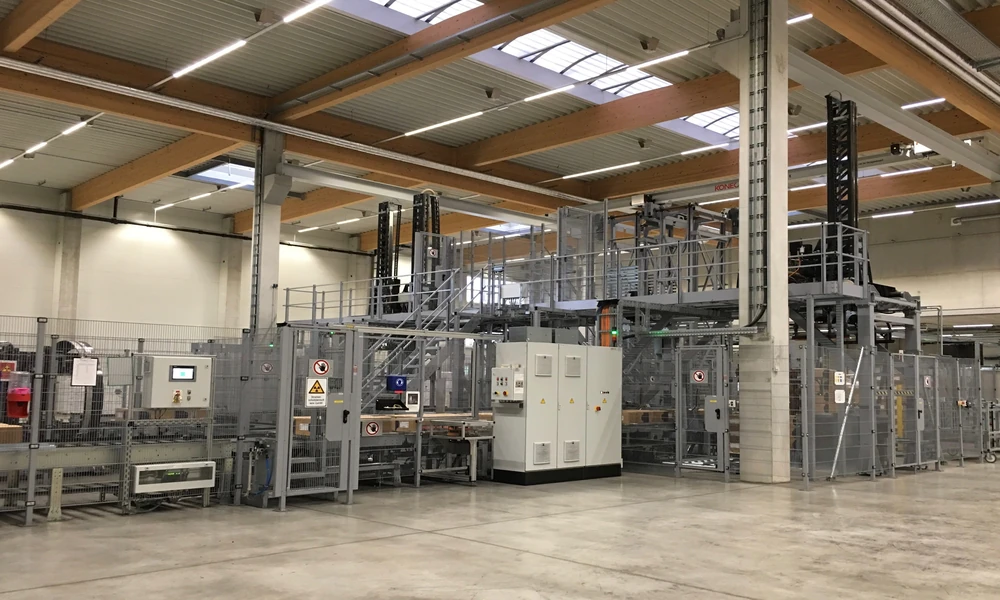
The throughput and reliability of an industrial gamma irradiation plant depend critically on the automated materials handling system that moves product through the irradiation cell. Carrier-type continuous irradiators use PLC-controlled conveyor systems to transport product containers through defined paths around the source rack at controlled speeds, ensuring that each product position receives the target dose. The design and reliability of this automated handling system determine facility throughput, dose uniformity, and operational uptime.
Conclusion
Industrial gamma irradiation provides validated, chemical-residue-free sterilization and decontamination for a wide range of medical, food, agricultural, and pharmaceutical applications. The design and commissioning of gamma irradiation plants require specialized engineering capability that integrates radiation physics, automated handling systems, process control, and regulatory compliance into a validated facility. For organizations evaluating irradiation as a sterilization or food safety technology, the combination of proven efficacy, regulatory acceptance, and the absence of chemical residues makes gamma irradiation a compelling option across many application contexts.