
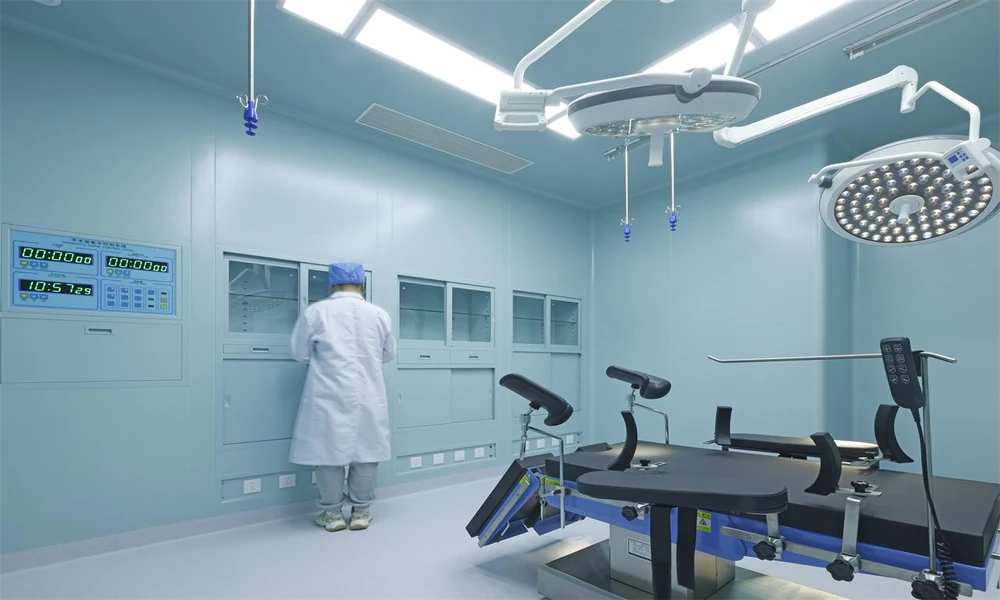
Private hospitals operate in an increasingly competitive healthcare market where efficiency, patient satisfaction, and financial performance are critical to success. To attract more patients and remain competitive, private healthcare providers must continually invest in modern medical facilities that deliver high-quality care while maximizing operational efficiency.
Among the most important investments is the operating theatre. As the center of surgical services, the operating room directly impacts patient outcomes, hospital reputation, and revenue generation. For this reason, many private hospitals are choosing modular operating theatre solutions over traditional construction methods.
By combining advanced cleanroom technology, prefabricated construction, and flexible design, modular operating theatres provide significant clinical and business advantages.
Faster Return on Investment
For private hospitals, every month of construction delay represents lost revenue.
Traditional operating theatre construction can take several months, delaying the launch of new surgical services. Modular operating theatres are prefabricated in controlled factory environments and assembled on-site, enabling significantly faster project completion.
Faster project completion allows hospitals to:
- Open surgical departments sooner
- Increase patient capacity more quickly
- Generate revenue earlier
- Reduce construction-related disruptions
A shorter construction period means a faster return on investment (ROI), making modular OT systems an attractive option for private healthcare providers.
Lower Long-Term Operating Costs
Private hospitals carefully evaluate the total cost of ownership of any infrastructure investment.
Modular operating theatres help reduce long-term costs through:
- Durable construction materials
- Lower maintenance requirements
- Easier component replacement
- Energy-efficient HVAC systems
- Reduced renovation expenses
These benefits help reduce operating costs and improve long-term cost efficiency throughout the facility’s lifecycle.
Improved Infection Control
Patient safety is fundamental to delivering quality healthcare and protecting a hospital’s reputation.
Modern modular operating theatres are designed to reduce the risk of surgical site infections by incorporating:
- Seamless antibacterial wall panels
- Hermetic doors
- Laminar airflow systems
- HEPA filtration
- Positive pressure ventilation
Improved infection control not only enhances patient outcomes but also strengthens patient confidence and supports hospital accreditation requirements.
Flexible Design for Future Growth
Private hospitals often expand their services as patient demand increases.
Modular operating theatres are highly customizable and can be designed for different specialties, including:
- General surgery
- Orthopedics
- Cardiac surgery
- Neurosurgery
- Gynecology
- Day surgery centers
As new technologies emerge, modular systems also make future upgrades easier without requiring extensive reconstruction.
This flexibility helps hospitals protect their long-term investment.
Better Patient Experience
Modern patients expect healthcare facilities that are safe, comfortable, and equipped with advanced medical technologies.
A well-designed modular operating theatre provides:
- Clean and professional environments
- Advanced surgical technology integration
- Improved workflow
- Reliable environmental control
These features contribute to higher patient satisfaction and reinforce the hospital’s commitment to quality healthcare.
Enhanced Hospital Reputation
Modern surgical facilities are a strong competitive advantage for private hospitals.
Investing in advanced modular operating theatres reflects a strong commitment to:
- Delivering high-quality patient care
- Adopting advanced medical technologies
- International healthcare standards
- Continuous infrastructure improvement
A modern operating theatre can help strengthen the hospital’s brand, attract skilled surgeons, and increase patient trust.
Ideal for Hospital Expansion and Renovation
Many private hospitals choose to expand or renovate existing facilities rather than build entirely new hospitals.
Modular operating theatres are ideal for these projects because they offer:
Hospitals can continue providing medical services while upgrading their surgical infrastructure.