
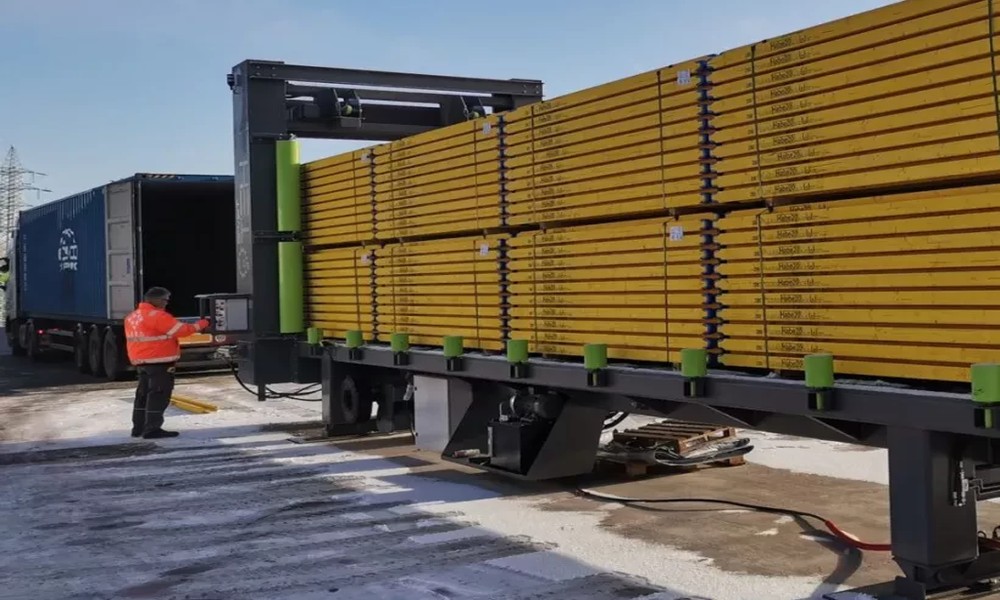
As logistics demands grow, businesses are adopting container unloading robots to improve warehouse efficiency, reduce labor reliance, and speed up operations. Widely used in fulfillment centers and distribution hubs, these automated systems enhance safety, lower operating costs, and increase unloading productivity with minimal human involvement.
What Is a Container Unloading Robot?
A container unloading robot is an automated system designed to unload cartons, bags, or packaged goods from shipping containers and transfer them to conveyors, pallets, or warehouse systems. These robots often combine robotic arms, vacuum grippers, AI vision systems, and conveyor integration to automate the unloading process.
Some advanced systems are capable of:
- Identifying mixed carton sizes
- Adjusting gripping positions automatically
- Operating continuously with high precision
- Integrating with warehouse management systems
- Handling heavy or irregular products safely
Many companies now incorporate these robots as part of a broader warehouse automation strategy or an integrated Automatic Unloading System designed to optimize inbound logistics operations.
Improving Warehouse Efficiency
One of the biggest advantages of container unloading robots is their ability to significantly improve warehouse efficiency. Unlike manual operations that depend on worker stamina and shift schedules, robots can operate continuously with stable performance.
Automated unloading systems can reduce container unloading times dramatically, helping warehouses process more shipments each day. Faster unloading also minimizes truck waiting times and improves dock utilization, which is critical for high-volume logistics facilities.
For businesses dealing with thousands of cartons daily, even small improvements in unloading speed can lead to major productivity gains over time.
Reducing Labor Dependency
Labor shortages have become a growing concern for warehouses worldwide. Recruiting workers for repetitive and physically demanding unloading tasks is increasingly difficult, especially during seasonal demand peaks.
Container unloading robots enable companies to minimize dependence on manual labor while ensuring stable and continuous operations. Instead of assigning large teams to container unloading, warehouses can redeploy workers to higher-value tasks such as inventory management, quality control, or equipment supervision.
This transition enhances labor efficiency and supports better long-term control of operational expenses.
Enhancing Workplace Safety
Warehouse safety is another key reason companies are investing in robotic unloading solutions. Manual unloading often involves repetitive lifting, bending, and working in confined container environments, increasing the risk of injuries and fatigue.
Container unloading robots minimize direct human involvement in these hazardous tasks. Through automating physically demanding unloading tasks, businesses can lower the risk of workplace injuries and promote employee health and safety.
Safer working conditions also help businesses lower compensation costs, reduce downtime, and maintain better compliance with workplace safety standards.
Supporting Smart Warehouse Automation
Modern warehouses are becoming increasingly connected and data-driven. Container unloading robots play an important role in smart warehouse ecosystems by integrating with conveyors, AGVs, palletizers, and warehouse management systems.
With AI vision and intelligent sensing technologies, these robots can adapt to changing package sizes and container layouts in real time. Some systems even collect operational data that helps managers monitor unloading efficiency, optimize workflows, and improve decision-making.
As automation technologies continue to evolve, robotic unloading systems are becoming a foundational component of intelligent warehouse operations.
Applications Across Industries
Container unloading robots are extensively applied in a wide range of industries, including:
- E-commerce fulfillment centers
- Food and beverage logistics
- Manufacturing plants
- FMCG distribution centers
- Chemical and raw material handling
- Third-party logistics warehouses
Whether handling cartons, sacks, or packaged consumer goods, these systems provide flexible automation solutions for businesses with different operational requirements.
The Future of Automated Unloading
As supply chains grow increasingly complex and customer demands keep rising, warehouse automation continues to be a key focus for logistics providers worldwide. Container unloading robots are expected to become even more intelligent, efficient, and adaptable in the coming years.
Future developments may include stronger AI capabilities, mobile robotic unloading platforms, and deeper integration with fully automated warehouse systems. More companies are also expected to adopt complete Automatic Unloading System solutions to streamline inbound logistics and improve overall warehouse performance.
Conclusion
Container unloading robots are transforming warehouse automation by improving efficiency, reducing labor dependency, and enhancing workplace safety. As businesses seek smarter and more scalable logistics solutions, robotic unloading systems are becoming an essential investment for modern warehouses.
With the continued advancement of AI, robotics, and intelligent logistics technologies, container unloading automation will play an increasingly important role in shaping the future of global supply chains.